Think Beyond a Desk Drawer
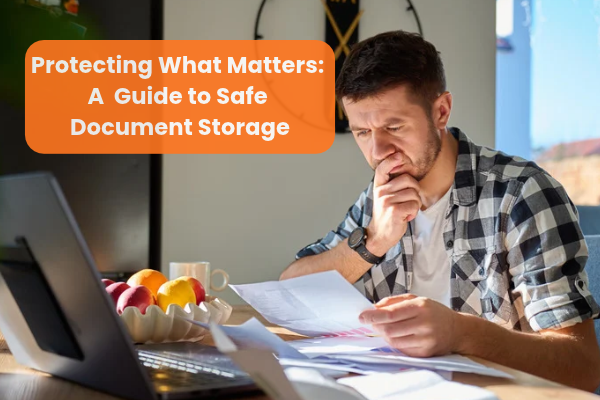
A desk drawer may keep paperwork organized, but it doesn't necessarily protect it.
Imagine what could happen if a pipe burst, a severe storm damaged your home or a fire occurred. Paper documents can be particularly vulnerable to water and fire.
For records you're keeping at home, consider a storage container designed to provide protection against hazards such as fire or water. Depending on your needs, locking capabilities can provide additional protection from unauthorized access.
When evaluating a home safe or storage container, pay attention to the manufacturer's specifications. "Fire-resistant," "water-resistant" and similar terms can have different meanings, and not every product provides the same level or duration of protection.
Think about the risks that are most relevant to your home and select storage accordingly.
Consider a Safe Deposit Box
Some documents or valuables may benefit from being stored outside your home.
A safe deposit box at a financial institution can provide another secure storage option. Keeping certain records in a separate location can be particularly helpful if your home is affected by a fire, severe weather or another disaster.
However, a safe deposit box shouldn't necessarily contain every important document you own.
Before placing something in one, consider how quickly you might need it and who would need access. Access to a safe deposit box may be limited to certain individuals and generally depends on the financial institution's availability and applicable account arrangements.
Documents you might need immediately during an emergency may be better kept securely at home or through another appropriate storage method.
The best approach may involve using more than one secure location depending on the document.
Know What You May Need Quickly
Not every important document serves the same purpose.
A property deed may be something you rarely need to access. Your insurance information, on the other hand, could be important immediately following an accident or emergency.
As you organize your records, think about them in terms of accessibility.
Which documents would you need if you had to leave your home quickly? Which might your family need if something happened to you? Which records are primarily being preserved for long-term safekeeping?
Consider keeping appropriate copies of frequently needed information in an accessible but secure location while protecting original documents appropriately.
Creating this distinction can help you avoid a situation where a critical piece of information is securely stored, but unavailable when you actually need it.
Create Digital Backups Where Appropriate
Physical storage is only part of the equation.
For documents that can appropriately be copied, consider creating digital backups. A digital copy may not always replace an original document, but it can provide useful information if the original is lost or damaged.
For example, having access to copies of insurance policies, identification information or important financial records could make the recovery process easier following an emergency.
Digital documents require their own security precautions, though.
Avoid simply taking photographs of sensitive documents and leaving them unprotected on your phone, computer or in an unsecured online account. Consider secure, encrypted storage and protect accounts with strong, unique passwords and multifactor authentication when available.
Just as you wouldn't leave your Social Security card sitting on the kitchen counter, you shouldn't leave a digital copy somewhere that's unnecessarily exposed.
Protect Your Financial Information
Bank statements, loan documents and other financial records can contain a significant amount of personal information.
As more banking activity moves online, you may find that you don't need to retain as much paper as you once did. Online and Mobile Banking can provide convenient access to certain account information and electronic statements without requiring you to maintain years' worth of paperwork at home.
For financial records you do retain, keep them in a secure location and periodically review whether they're still needed.
Be especially careful with documents containing account numbers, Social Security numbers, dates of birth and other information that could potentially be used for identity theft.
Document security isn't just about preserving the paper. It's about protecting the information printed on it.
Don't Forget About Documents When You Move
Moving is one of those times when important paperwork can easily go missing.
Boxes are being packed, belongings are moving from room to room and paperwork that normally stays in one location can suddenly become part of the shuffle.
If you're preparing for a move, personally keep track of your most important records rather than placing them in a general moving box.
The same principle applies during major home renovations or other situations that disrupt your normal organization.
Whenever your belongings are being moved around, take a moment to make sure sensitive documents remain accounted for and secure.
Know How to Dispose of Documents Safely
Secure document storage also involves knowing when—and how—to get rid of paperwork.
When you determine that a document containing sensitive information is no longer needed, don't simply place it in the trash or recycling bin.
Statements, applications, expired identification documents and other records may contain enough information to create an identity-theft risk.
Shredding sensitive paperwork before disposal can help prevent personal information from falling into the wrong hands. A cross-cut shredder can provide greater protection than simply tearing documents into a few pieces.
Some communities and organizations also periodically offer secure document-shredding events.
Before destroying financial, tax, legal or other important records, make sure you're confident they no longer need to be retained. Record-retention requirements can vary depending on the type of document and your circumstances, so consult the appropriate tax, legal or financial professional if you're uncertain.
Make Sure Someone Else Knows Your Plan
Imagine you've carefully organized every important document you own, secured everything in the right place and created appropriate backups.
There's just one problem: no one else knows where anything is.
You don't need to share sensitive information broadly. The goal is to make sure an appropriate person isn't left searching through your home trying to determine where you've kept your insurance information, estate documents or other essential records.
This is especially important when thinking about estate planning and emergency preparedness.
Good organization isn't only about making things easier for you. It can make things easier for the people who may someday need to help you.
Review Your Documents Regularly
Once you've organized your records, make document storage part of your regular financial routine.
Once or twice a year, take a few minutes to review what you're keeping.
Ask yourself:
Do I still need this document? Some records need to be retained for specific periods, while others may no longer serve a purpose.
Is the information current? Insurance policies, estate documents and other records can become outdated as circumstances change.
Is everything still where it belongs? Important documents sometimes get removed and never make their way back to their designated location.
Are my digital backups secure and accessible? Technology and accounts change, so make sure your backup strategy still works.
Does someone I trust know where important information is located? If your circumstances have changed, revisit who needs to know.
A brief periodic review can keep your system from gradually becoming another collection of forgotten paperwork.
A Simple Document-Security Checklist
If your important documents could use some attention, start with these steps:
- Inventory your important records. Identify the documents that would be difficult or inconvenient to replace.
- Create a dedicated storage location. Avoid keeping sensitive paperwork scattered throughout your home.
- Protect against more than theft. Consider fire, water and other potential damage when choosing home storage.
- Determine what needs to be readily accessible. Don't place something you may urgently need somewhere that's difficult to access.
- Consider off-site storage. A safe deposit box may be appropriate for certain important documents or valuables.
- Create secure digital copies when appropriate. Remember that digital information needs protection, too.
- Safely destroy documents you no longer need. Shred sensitive paperwork rather than simply throwing it away.
- Tell someone you trust where important documents are kept. Make sure necessary information can be found during an emergency.
- Review your system periodically. Keep documents, storage methods and access information current.
You don't need a complicated filing system to protect your information. What matters most is having a system you can consistently use.
We're Here to Help
Protecting your financial information goes beyond strong passwords and keeping a close eye on your accounts. Sometimes, it starts with something as simple as knowing where your important paperwork is.
Taking inventory of your records, choosing appropriate storage, creating secure backups and safely disposing of documents you no longer need can help protect both your information and your peace of mind.
At Kennebec Savings Bank, we're committed to helping our customers protect their financial information and prepare for the unexpected. Whether you're organizing your financial records, exploring secure storage options or looking for ways to better manage your accounts digitally, we're here to help.
Because when the unexpected happens, knowing that your important information is protected—and knowing exactly where to find it—is one less thing to worry about.